
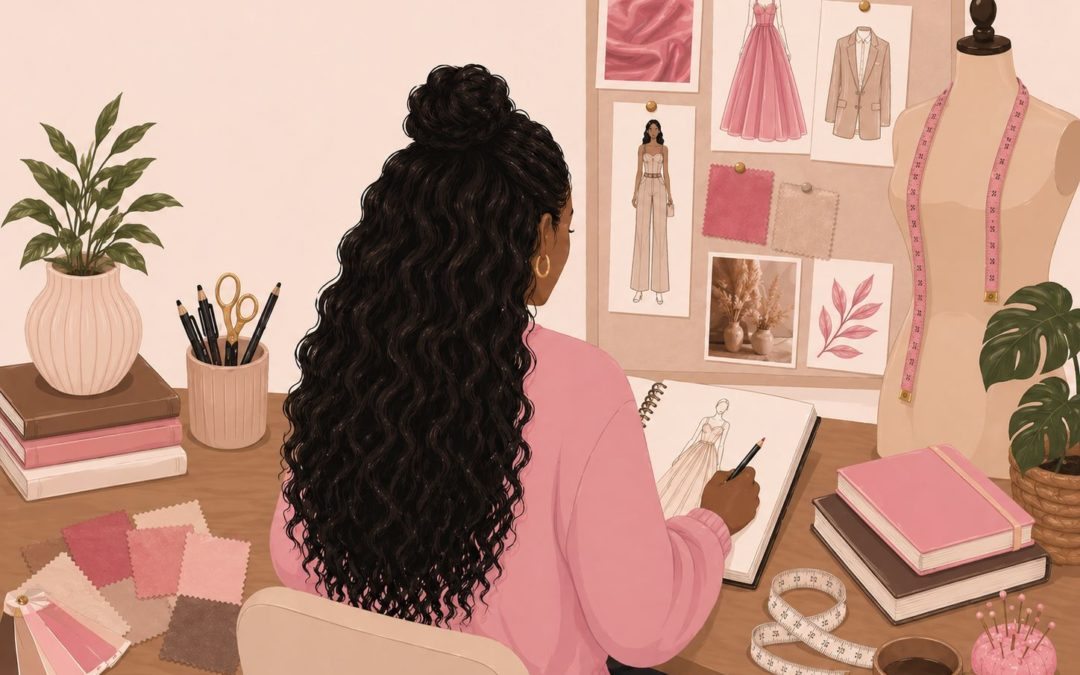
Design new clothing, create whole fashion ranges worthy of the catwalk and put those creative and technical skills to good use, become a fashion designer! The average fashion designer earns between £24,000 and £40,000 a year, but of course, if you’re talented enough to feature in Paris Fashion Week, alongside names like Louis Vuitton,Dior and Chanel, you could earn far more! But first, you need to get your foot in the door. So how do you become fashion designer?
How to become a fashion designer?
There are multiple routes you can take to become a fashion designer, choose the path that best suits your skillset, preferences and personal circumstances.
Education
Lots of universities and colleges providing fashion related courses are members of the British Fashion Council, enabling you to potentially build connections with employers in the fashion industry.
University:
Attaining a foundation degree, higher national diploma or a degree can place you in an excellent position to become a fashion designer. Suitable courses include: fashion design, textiles, art and design, and garment technology. To gain the practical knowledge you need to flourish in the fashion industry, you’ll need to study a course that provides both design and technical skills. To study a degree, you will need 2 or 3 A levels (or equivalent). Alternatively, for a foundation degree or higher national diploma, you’ll need 1 or 2 A levels (or equivalent).
College:
If you’re aiming to become an assistant in the fashion industry, you can do a college course in a subject such as fashion, fashion and textiles, or craft and design. Later, once you’ve secured an employer, you could consider further training to allow you to work up to higher roles in the industry.
Tips to begin your career
As well as gaining knowledge through education, there are some other things you can do to secure a role in fashion.
Internships
Perfect for student or recent graduates, a fashion internship is an entry-level position lasting for one to four months. An internship will give you hands-on experience with a brand, magazine, or in a design house. As an intern, you would be involved in things like photoshoots, marketing and design research, and it will help you to build professional networks in the industry.
Volunteering
Volunteer work can provide some of the same opportunities as an internship, such as networking and gaining hands-on skills. Unlike an internship, this is not an entry-level position, it may not last as long, or it could potentially last longer, either way, it will strengthen your professional resume.
Portfolio
Creating a portfolio to show prospective employers is an excellent chance to showcase your skills and vision. A portfolio should include designs, mood boards, technical drawings and some examples of completed fashion designs you have created.
Hone your skills
To become a fashion designer, you will need to show you have a good balance of creative, technical and business skills, so it important to work on these skills as soon as possible. Some of the skills you will require include:
Creative skills
- Capable of developing unique concepts and innovative styles
- Good attention to detail
- Ability to visualise final products from initial concept
- Adapting designs from feedback received
- Strong knowledge of fabrics, materials, and their properties
Technical skills
- Construction and sewing garments
- Creating technical patterns
- Sketching and Illustration
- CAD and Digital Design
- Researching and predicting upcoming fashion trends
Business skills
- Ability to understand budgeting, costs and marketing
- Collaborating with suppliers, marketers, and manufacturers
- Effective time management and an ability to work to deadlines
- Ability to network
The role of fashion designer
You may love fashion and you may have some good design ideas, but before you can really decide if becoming a fashion designer is the right role for you, you should take some time to understand what the role entails.
Daily tasks
Working as a fashion designer may involve working in different environments, including a creative studio and a workshop.
Daily tasks include:
- Keeping up-to-date with the latest trends in colours, prints, fabrics, and shapes
- Developing new concepts and showcasing these in mood boards, which may include photos, colour samples and pieces of fabric to reflect the mood you’re trying to create
- Creating sketches and designs, either by hand or by using computer-aided design (CAD) software
- Managing quality and costs through collaboration with product development teams
- Supervising design assistants and patternmakers
- Developing and presenting concepts and ranges to production managers, merchandisers and customers
Career progression
A career in fashion has lots of progression opportunities, including:
- Going freelance or starting your own fashion company
- Becoming a senior designer, head of fashion or a creative director
- Specialising in a particular collection, such as sportswear or childrenswear
- Moving into another role in fashion, such as marketing or buying
- Teaching fashion design at university or college